Gold Vintage
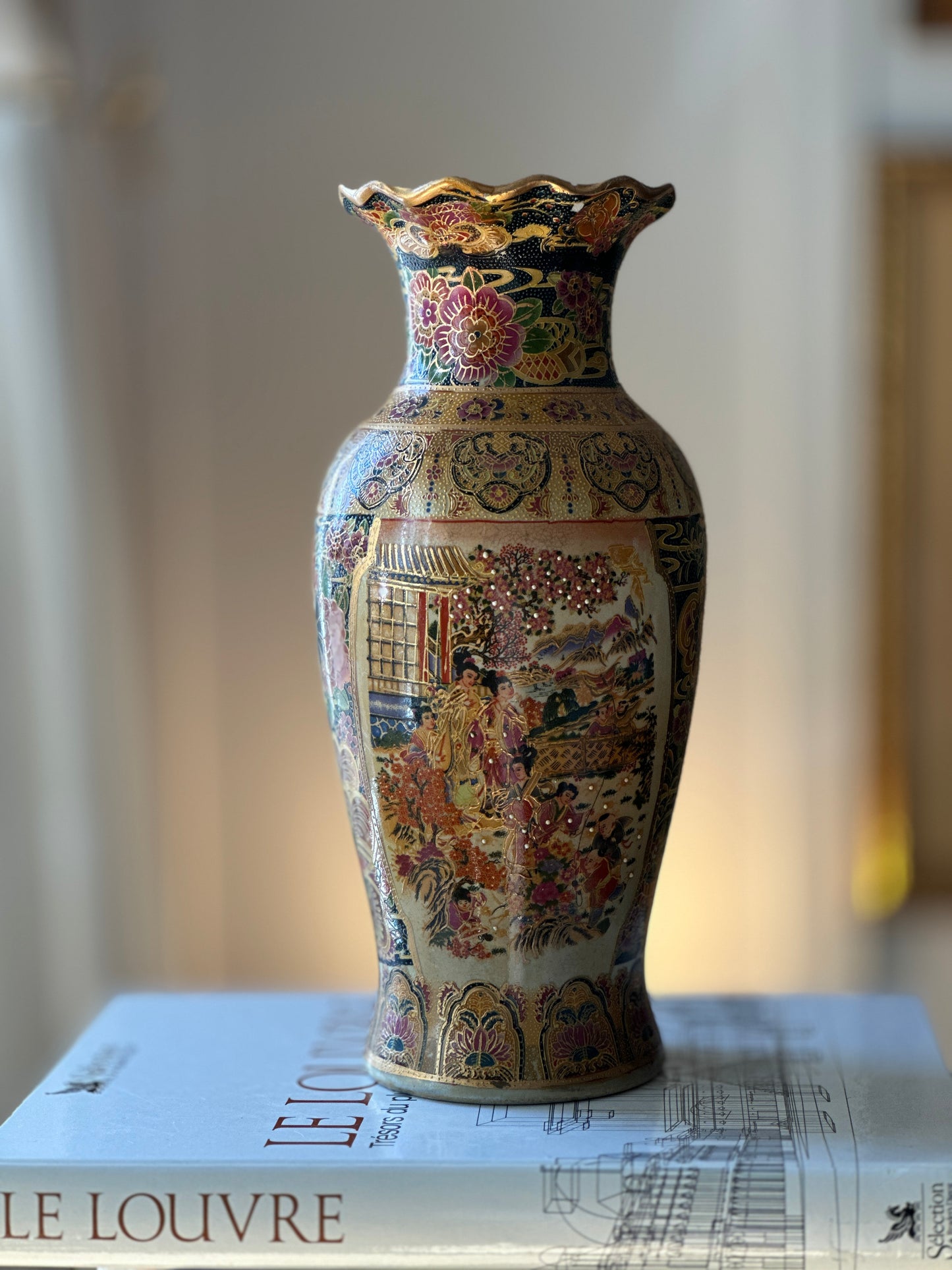
Vintage Royal Satsuma Porcelain Vase
Prix habituel
$65.00
Prix habituel
Prix soldé
$65.00
Prix unitaire
par
Impossible de charger la disponibilité du service de retrait
This Vintage Royal Satsuma Style Porcelain Vase features a highly detailed, hand-painted scene of traditional figures relaxing in a vibrant garden. The entire piece is highlighted with heavy rich gold gilt that catches the light beautifully, and it is topped with a dramatic, wavy scalloped rim.
A brief history of Satsuma Vases:
The historical timeline of these distinct vases breaks down into three key eras:
1. The 16th-Century Roots (Humble Beginnings)
- The Origin: True Satsuma ware originated in the late 16th century in the Satsuma Province of southern Kyushu, Japan.
- The Style: Originally, it looked nothing like this vase. Early pieces were simple, rustic, dark-glazed earthenware made for everyday kitchen use and traditional tea ceremonies.
- The Shift: By the late 18th century, potters developed Kyō-Satsuma, transitioning to an ivory-colored clay base with a finely crackled transparent glaze, which paved the way for adding colorful painted designs.
2. The Meiji Period & The Export Craze (1868–1912)
- Going Global: When Japan opened its borders to international trade during the Meiji Restoration (1868), Satsuma pottery was showcased at World's Fairs in Europe and North America.
- The "Gilded" Evolution: Western buyers fell completely in love with Eastern art, prompting a movement known as Japonisme. To cater to Western tastes for high luxury and opulence, Japanese artisans began smothering the vases with details like heavy gold gilt, raised enamel textures called moriage, and highly crowded scenes of Geishas, samurais, and landscapes.
- Mass Appeal: Authentic, highly detailed Meiji-era artisan pieces from this timeframe became incredibly valuable and are highly sought after by fine art collectors today.
3. The 20th-Century "Royal Satsuma" Era (The Modern Revival) - This Vase
- The New Label: Vases explicitly stamped with the English words "Royal Satsuma" or featuring modern red stamps are generally not 19th-century antiques. Instead, they are mid-to-late 20th-century creations (often produced between the 1950s and 1980s).
- Production Shift: Capitalizing on the enduring global obsession with vintage Japanese aesthetics, factories in both Japan and China began replicating the historic Meiji-era style for the mass decorative market.
- Porcelain vs. Earthenware: While historic Satsuma was traditionally crafted from soft, thick earthenware, these 20th-century "Royal Satsuma" pieces are usually made from crisp, bright porcelain, allowing them to be lighter and more durable.
Today, this style remains celebrated as a classic staple of Hollywood Regency and Chinoiserie chic interior design.
Share